
Hard-Anodized Collection
Figmint Hard-Anodized Cookware
Dark, durable and built for daily cooking. Figmint hard-anodized cookware combines a tough aluminum body with a nonstick interior, giving you fast, even heat and easy cleanup for everyday skillets, sauté pans and sets.
Overview
What Hard-Anodized Means
Hard anodizing is an electrochemical process that thickens the natural oxide layer on aluminum. The result is a surface that is harder and more resistant to scratches and corrosion than plain aluminum, while keeping aluminum’s best quality: quick, even heating.
Figmint pairs that body with a nonstick interior, so you get a pan that warms fast, browns evenly and releases food easily. It sits between stainless steel and ceramic: sturdier than many lightweight nonstick pans, and easier for eggs and fish than bare steel.

Why It Works
Where Figmint Hard-Anodized Shines
Everyday Skillet Cooking
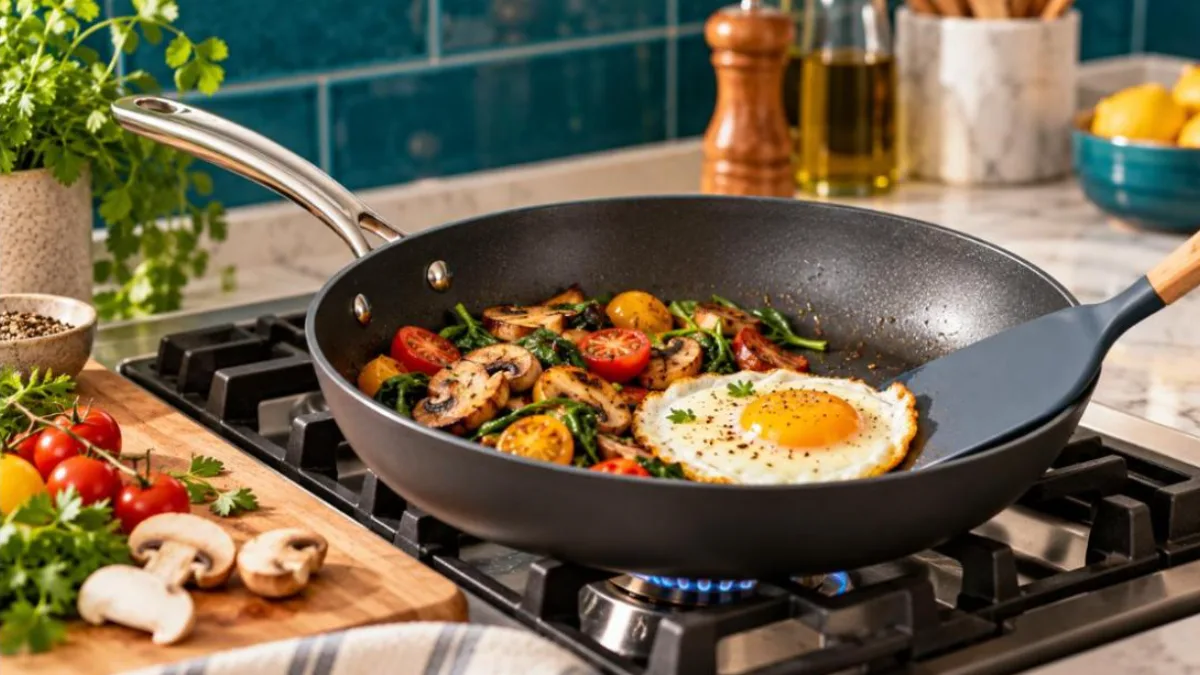
The hard-anodized nonstick skillet is a natural daily driver for omelets, smash burgers, sautéed greens and reheating leftovers without sticking.
Even Heating
Aluminum spreads heat quickly across the base, so food cooks evenly with fewer hot spots than thin pans.
Easy Cleanup
The nonstick interior means most meals wipe out with warm soapy water. Some pieces are listed as dishwasher safe for busy weeknights.
Oven Finishing
Many pieces are oven safe to around 350°F, handy for finishing a frittata or keeping food warm.
Hard-Anodized vs Ceramic vs Stainless Steel
| Feature | Hard-Anodized | Ceramic Nonstick | Stainless Steel |
|---|---|---|---|
| Food release | Very easy | Very easy | Needs preheating and oil |
| Durability | High for a nonstick pan | Moderate | Very high |
| Heat response | Fast and even | Fast | Steady |
| Typical oven limit | About 350°F | 350°F to 400°F | Higher, with metal handles |
| Best for | Everyday sautéing | Eggs and low-oil cooking | Searing and sauces |
Honest Pros and Cons
What We Like
- Tough, scratch-resistant body
- Fast, even heating
- Easy food release and cleanup
- Good balance of weight and sturdiness
Keep in Mind
- Nonstick interior still prefers medium heat
- Avoid metal utensils on the coating
- Lower oven limit than stainless steel
- Check each listing for induction compatibility
FAQ
Frequently Asked Questions
Yes, it is a solid everyday choice for anyone who wants nonstick convenience with a sturdier body. It heats quickly and evenly and cleans up easily.
Many pieces are oven safe to about 350°F. Check the product details for the exact limit, especially for lids.
Some pieces, such as the hard-anodized nonstick skillet, are listed as dishwasher safe. Hand washing still helps the nonstick interior last longer.
Some pieces are induction compatible. Look for induction in the product details before buying.
Both have nonstick interiors. Hard-anodized refers to the hardened aluminum body, which is very durable, while ceramic refers to the type of nonstick coating. Ceramic is often chosen for its PFAS-free coating and light color.
Explore More Figmint Cookware
Check Today’s Price on Figmint Hard-Anodized Cookware
Compare current skillets and sets before you buy.