
Is Figmint Cookware Non-Toxic? What to Know About Figmint Cookware Safety
If you are considering Figmint cookware, you probably have questions about the materials, the nonstick coatings and the chemicals used in the products. Is Figmint cookware safe? Is it non-toxic? Do Figmint pans contain PFAS or Teflon? What about lead?
The answer depends on the specific Figmint product and the material or coating it uses. Figmint offers cookware made with different materials and surfaces, including ceramic-coated aluminum, stainless steel, cast iron and other cookware types. That means it is better to evaluate the specific product than to assume every Figmint pan or pot has the same construction.
This guide explains what to look for when you evaluate Figmint cookware safety, including PFAS, PTFE, PFOA, Teflon, lead, ceramic coatings and proper cookware care.
The short answer
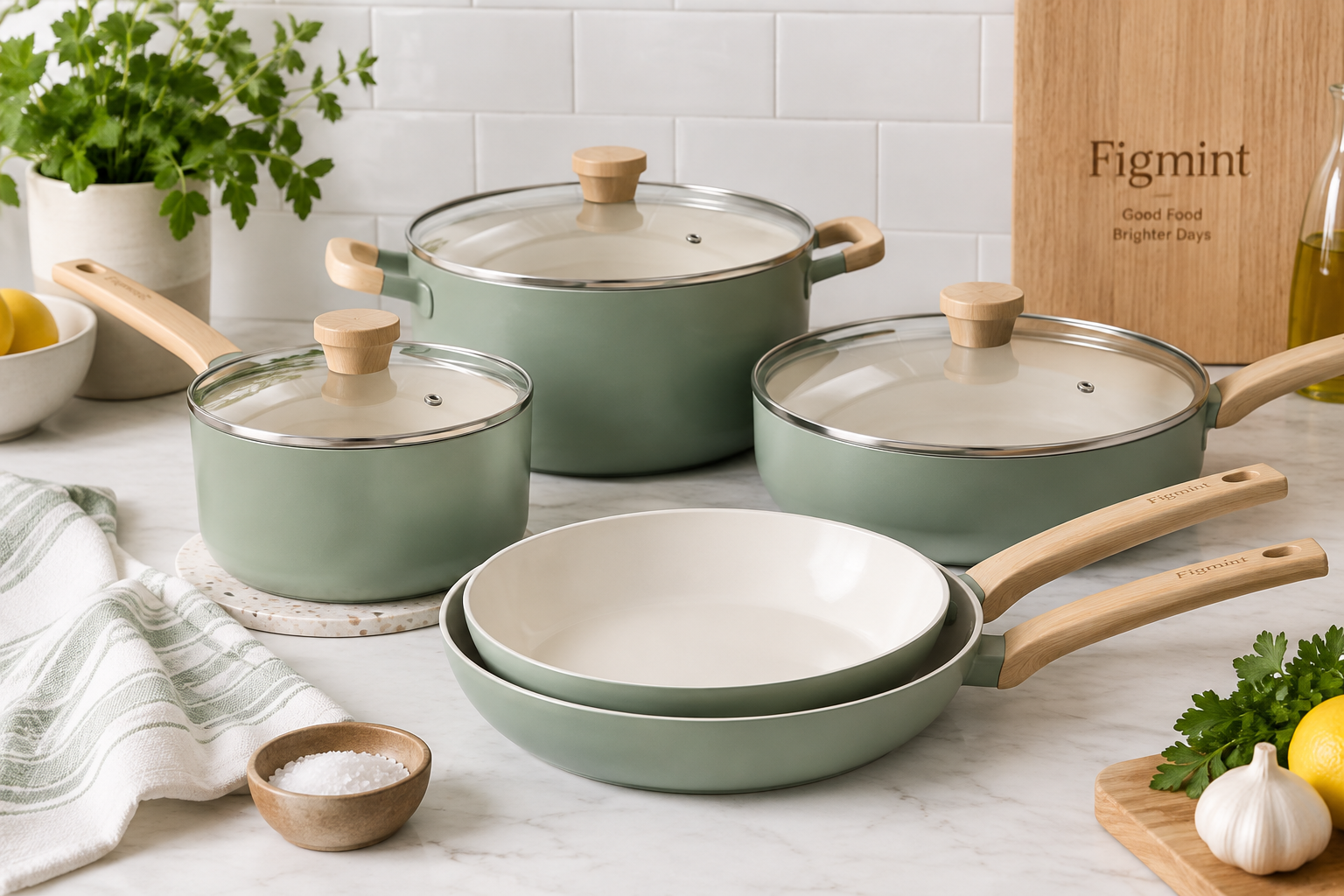
There is no single answer that covers the whole brand. Figmint sells ceramic-coated aluminum, stainless steel, cast iron and stoneware pieces, and each one has its own materials and care requirements. Several current Figmint ceramic-coated aluminum products are listed as made without PTFE and PFOA, and the Figmint cookware category describes its ceramic cooking surface as PFAS-free. The reliable approach is to read the listing for the exact item you are buying and check its material, coating, oven rating and care instructions.
Is Figmint Cookware Safe?
Figmint cookware is designed for everyday cooking, but cookware safety always depends on several factors: the base material, the cooking surface, the coating, the temperature limits and the way the cookware is used.
Several Figmint nonstick ceramic-coated aluminum products are specifically described as being made without PTFE and PFOA. Those products also carry stated temperature limits and care instructions written to protect the cooking surface.
The important point is that Figmint cookware is a broad category. A ceramic-coated aluminum fry pan and a cast iron or stainless steel piece should not be treated as the same product.
When you evaluate a particular Figmint product, check:
- The cookware base material
- Whether the piece has a coating, and what type of coating it is
- Whether the manufacturer identifies specific substances as excluded
- The maximum oven temperature
- The recommended utensils
- The cleaning instructions
- The condition of the cooking surface, especially on used cookware
You can see the current range on the Figmint cookware collection page, and our guide to cookware safety tips before buying new pots and pans covers the checks that apply to any brand.
Is Figmint Cookware Non-Toxic?
Non-toxic cookware is a common shopping term, but it is not a single material classification that applies equally to every product on the shelf. Rather than asking whether a whole brand is non-toxic, it is more useful to look at the actual material and cooking surface of the piece you are considering.
Figmint makes ceramic-coated nonstick cookware built on an aluminum base. Target product listings identify several of these items as having a ceramic nonstick surface and being made without PTFE and PFOA. That distinction matters, because a ceramic-based nonstick coating is not the same thing as traditional PTFE-coated nonstick cookware.
What Should You Look for in Non-Toxic Cookware?
If you are shopping with safety in mind, look for clear information about the base material, the cooking surface, the coating formulation, PTFE, PFOA, PFAS, heavy metals where relevant, temperature limits and care instructions. If the health angle is your main reason for switching, our guide on how cookware affects healthier cooking goes into more detail.
Worth remembering: there is a difference between a product being called non-toxic by a retailer or a reviewer and a specific, verifiable material claim printed on the product listing. The second one is what you can act on.
Are Figmint Pans Non-Toxic?
Figmint sells several types of pans, so the answer follows the pan. Current Figmint ceramic-coated aluminum fry pans and sauté pans are described by Target as having a ceramic nonstick surface and being made without PTFE and PFOA. That makes the material and coating details particularly important when you compare options.
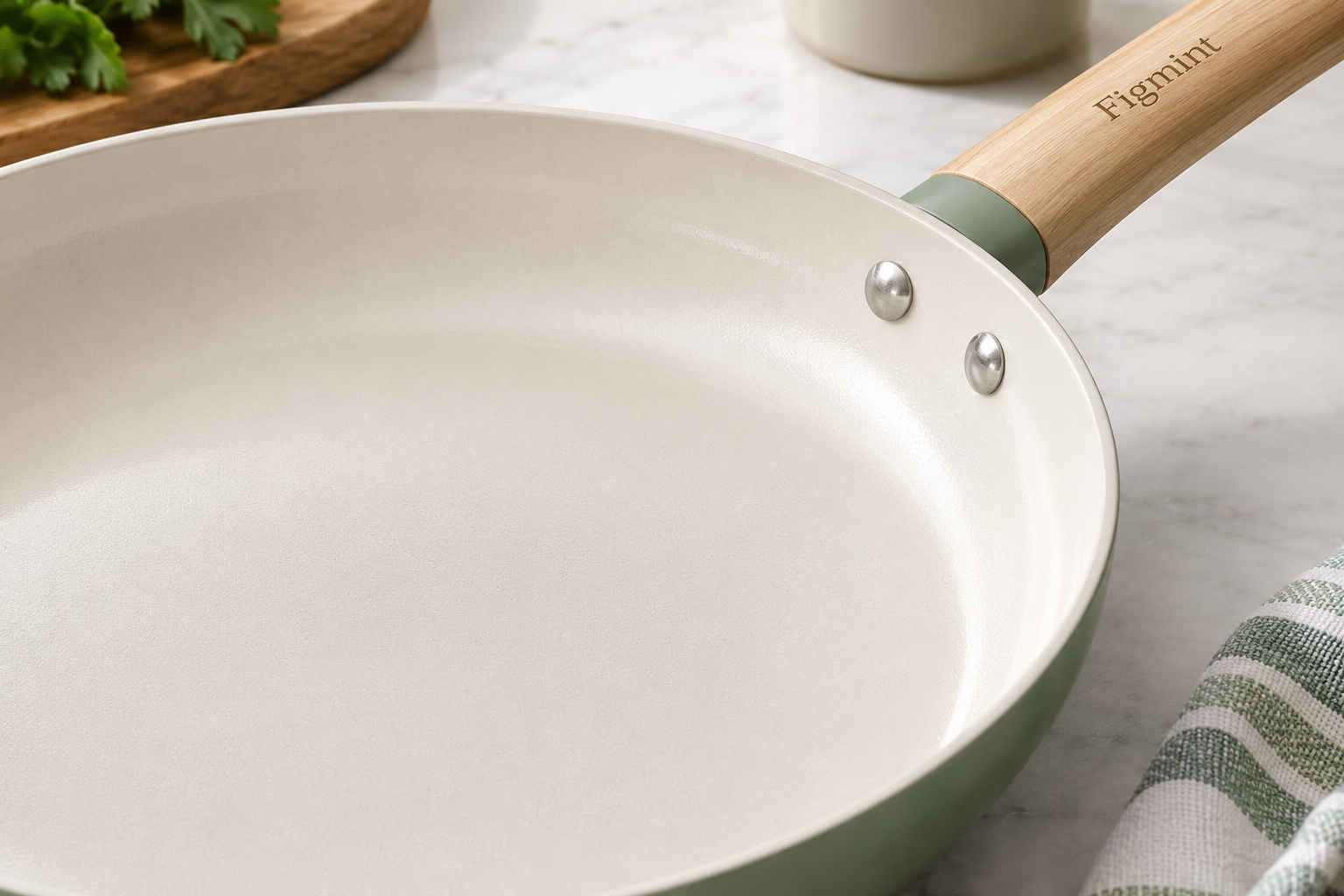
Before you buy a specific Figmint pan, check the listing for its:
- Construction material
- Coating type
- PTFE and PFOA information
- Temperature rating
- Cooktop compatibility
- Utensil recommendations
- Cleaning instructions
You can compare the available Figmint pans and cookware sets before you decide.
Does Figmint Cookware Contain PFAS?
PFAS is one of the most common concerns people raise when shopping for nonstick cookware. PFAS stands for per- and polyfluoroalkyl substances, a large group of chemicals used across many industries. Some shoppers specifically want cookware that does not rely on PFAS-based nonstick coatings.
Figmint ceramic-coated cookware listings give useful product-level information here. Several Figmint ceramic nonstick products are explicitly described as made without PTFE and PFOA, and the Figmint cookware category describes its ceramic cooking surface as PFAS-free. Even so, check the specific product you are buying instead of assuming every Figmint item shares the same formulation.
Are Figmint Pans PFAS-Free?
For Figmint ceramic-coated nonstick pans where the current listing states that the coating is made without PTFE and PFOA, that claim applies to that particular product. If you are comparing several Figmint pans, read each one's current specifications, because Figmint sells more than one cookware material and product type.
Does Figmint Cookware Contain Teflon?
Teflon is a brand name commonly associated with PTFE-based nonstick coatings. If you are trying to avoid Teflon or PTFE, look for an explicit product statement about PTFE rather than assuming that every nonstick pan uses the same coating chemistry.
Several current Figmint ceramic-coated aluminum cookware listings state that they are made without PTFE. Some listings also include direct answers to customer questions confirming that particular ceramic-coated products do not contain PTFE.
Is Teflon the Same as PFAS?
PTFE is a fluoropolymer that belongs to the broader PFAS family of substances. Because PFAS-free and PTFE-free are sometimes used differently in product marketing, it pays to read the exact claim made for the product. If avoiding PFAS is a priority for you, look for a clear PFAS-free statement instead of relying on the word ceramic alone.
Does Figmint Cookware Contain Lead?
Lead is a separate issue from PFAS and PTFE. Whether it is relevant depends on the specific cookware material, glaze, coating and product, which is why we would not make a blanket statement that every Figmint product is either lead-free or contains lead without looking at the individual item and its supporting documentation.
For any cookware you are considering, check the current product information and any applicable safety disclosures. If a product has a glaze, an enamel or another surface treatment, the specific formulation matters.
What Should You Do If You Are Concerned About Lead?
- Check the current product specifications.
- Look for manufacturer or retailer safety information.
- Look for applicable testing or compliance information.
- Contact the retailer or manufacturer if the information you need is not published.
- Avoid drawing conclusions from the cookware color or appearance alone.
One caveat: safety information changes as products and formulations change. Current product documentation from 2026 is more useful than an older third-party claim about a cookware line.
Is Figmint Ceramic Cookware Safe?
Figmint offers ceramic-coated cookware alongside its other cookware types. The ceramic-coated aluminum products currently listed by Target use an aluminum body with a ceramic nonstick cooking surface, and several are listed as made without PTFE and PFOA. They also arrive with care recommendations intended to protect that surface.
Figmint recommends silicone, nylon or wood utensils with several of its ceramic-coated products. Some pieces are dishwasher safe, although hand washing is recommended for longer product life. As with any coated cookware, the condition of the cooking surface matters, so it is worth treating a nonstick coating as a consumable surface rather than an indestructible one.
If you already own a coated set, our walkthrough on cleaning and maintaining nonstick cookware without damaging it is the practical companion to this page. You can browse the current Figmint ceramic cookware line-up as well.
Is Figmint Nonstick Cookware Safe?
Nonstick describes how a surface behaves, not what it is made of. Figmint ceramic-coated nonstick cookware differs from traditional PTFE-coated nonstick cookware because the listings identify the ceramic coating as being made without PTFE and PFOA. That does not remove the need to follow the care instructions.
To protect the cooking surface:
- Use the recommended utensils
- Avoid abrasive cleaning products
- Stay inside the stated temperature limits
- Avoid overheating empty cookware
- Retire cookware that is significantly damaged
- Follow the manufacturer cleaning recommendations
For the other side of the picture, see the benefits of using nonstick cookware in modern kitchens.
How to Use Figmint Cookware Safely
Even cookware designed for daily use performs best when it is used the way the manufacturer intended. Five habits cover most of it.
Follow the temperature limit
Different Figmint products carry different ratings. Several ceramic-coated aluminum pieces are listed as oven safe up to 450°F, but do not assume every Figmint pot, pan or lid matches that. Check the exact product before it goes in the oven.
Use the right utensils
Several Figmint ceramic-coated products recommend silicone, nylon or wood utensils. Metal can damage some coated surfaces, so follow the care instructions written for that piece.
Avoid overheating
Do not deliberately heat an empty coated pan at high temperatures. Keep the pan inside the temperature range specified for the product and let it come up to heat gradually.
Protect the cooking surface
Avoid unnecessary scratching and abrasive cleaning on coated pieces. Some Figmint sets include pan protectors specifically to prevent scratching while the cookware is stacked in storage.
Follow the cleaning instructions
Some Figmint cookware is dishwasher safe, while certain listings recommend hand washing to extend product life. Check the instructions for the individual item rather than the set.
Our longer guide on making your pots and pans last longer covers storage and seasoning habits that apply across materials.
How Does Figmint Compare With Different Cookware Materials?
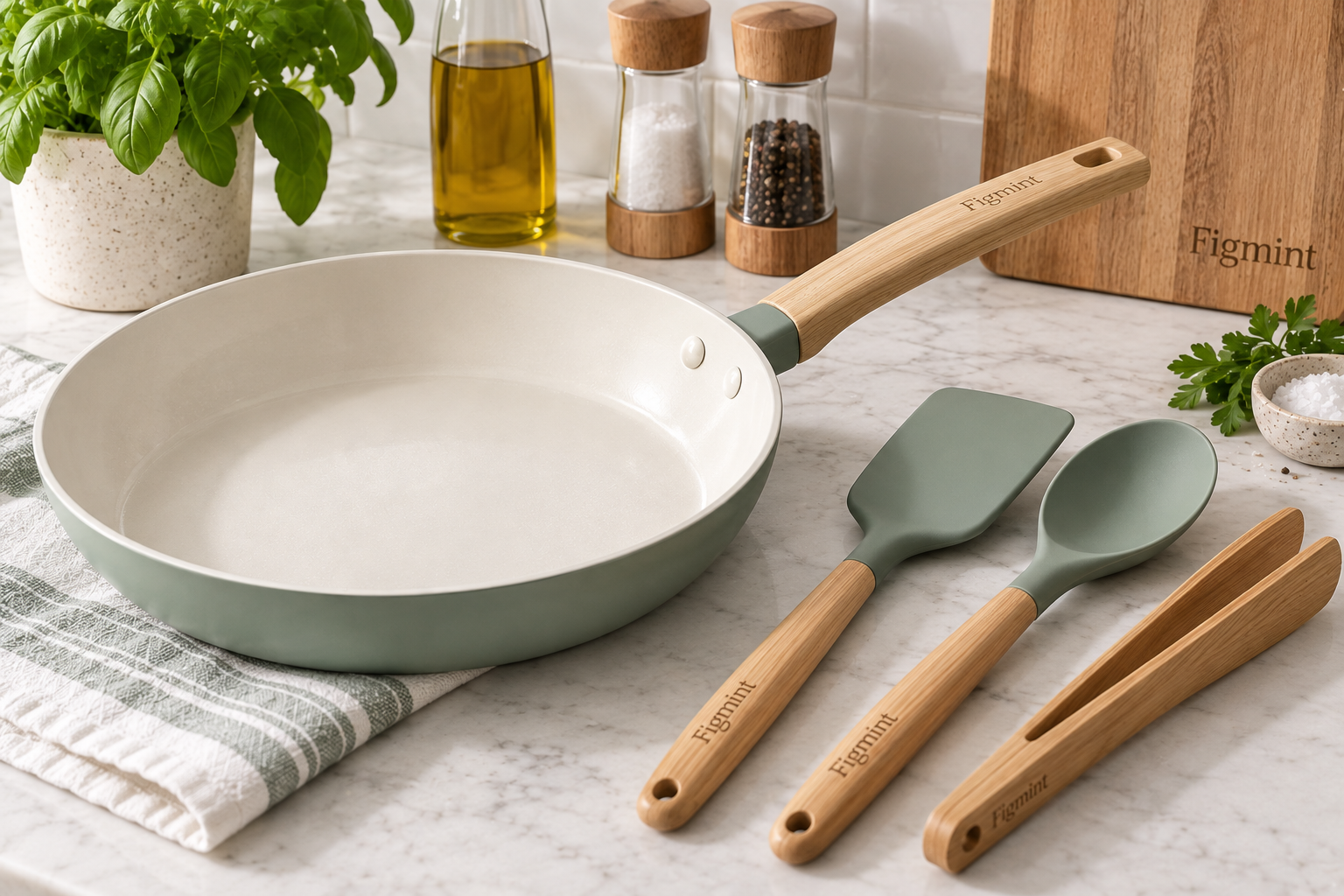
No single cookware material is automatically best for every kitchen. What changes is the trade-off you accept.
| Cookware type | What to consider |
|---|---|
| Stainless steel | Durable cooking surface with no traditional nonstick coating |
| Cast iron | Extremely durable, but it needs seasoning and ongoing maintenance |
| Ceramic-coated aluminum | Nonstick cooking surface with product-specific coating claims |
| Traditional nonstick | Requires attention to coating type, temperature and care |
| Stoneware or enamel | Surface composition and glaze are the main considerations |
The most useful habit is to understand the specific cookware you are buying instead of choosing by a broad label such as ceramic, nonstick or metal. If you are weighing two of the most common options against each other, read stainless steel vs nonstick, and for a wider view start with how to choose the right cookware material for everyday cooking.
What Should You Check Before Buying Figmint Cookware?
If cookware safety is one of your priorities, run through this checklist before you add anything to the cart.
- Check the material. Find out whether the piece is stainless steel, cast iron, aluminum, ceramic-coated, stoneware or something else.
- Check the cooking surface. Determine whether it is uncoated, ceramic-coated, enamel-coated or another type of nonstick surface.
- Look for specific coating claims. If avoiding certain substances matters to you, look for explicit information about PTFE, PFOA or PFAS.
- Check the temperature rating. Oven-safe limits are not uniform across the Figmint range.
- Check the care instructions. The correct utensils and cleaning method extend the usable life of the piece.
- Check the size. A pan that is too large or too small changes how evenly food cooks, so read up on how cookware sizes affect your cooking.
- Consider the condition of used cookware. If you are buying secondhand or reusing older pieces, inspect the surface closely and re-read the current care recommendations.
Figmint Cookware Safety: The Bottom Line
So, is Figmint cookware non-toxic? There is no blanket answer that applies to every Figmint product, because the brand sells cookware built from different materials with different surfaces.
For current Figmint ceramic-coated cookware, Target listings identify several products as made without PTFE and PFOA, while the Figmint cookware category describes its ceramic cooking surface as PFAS-free. If safety is your priority, focus on the actual material, coating, temperature rating and care instructions for the item in front of you rather than on a broad non-toxic label.
And if you are still deciding which Figmint cookware suits your kitchen, start by comparing the cookware types, materials and sets side by side.
See the full Figmint cookware range
Frequently Asked Questions
Is Figmint cookware non-toxic?
Figmint sells cookware made with different materials, so safety is best evaluated at the product level. Several current Figmint ceramic-coated cookware products are listed as made without PTFE and PFOA.
Are Figmint pans non-toxic?
Several Figmint ceramic-coated pans are listed as made without PTFE and PFOA. Check the current specifications for the exact pan you are considering.
Is Figmint cookware safe?
Figmint cookware is designed for cooking, but different products have different materials, coatings and care requirements. Follow the product-specific instructions and temperature limits.
Is Figmint cookware toxic?
Toxic is too broad a classification for an entire cookware brand. Evaluate the specific product materials, coating and safety information instead.
Does Figmint cookware contain PFAS?
Current Figmint ceramic cookware listings describe the ceramic cooking surface as PFAS-free, while individual product listings also provide specific PTFE and PFOA claims. Check the current product information for the exact item.
Do Figmint pans have Teflon?
Several current Figmint ceramic-coated pans are specifically listed as made without PTFE. Check the listing for the exact pan, because Figmint sells different cookware types.
Does Figmint cookware contain lead?
Lead questions need to be evaluated at the product level, particularly for products involving glazes or enamel surfaces. Check the current product information and safety disclosures for the specific item.
Can Figmint pans go in the oven?
Some Figmint pans are oven safe, but the maximum temperature varies by product. Several ceramic-coated aluminum Figmint pans are listed as oven safe up to 450°F. Always check the specifications for the exact pan before using it in the oven.